Welcome, Young Fish Scientists!
Learn about incredible salmon species and help real scientists count fish at Winchester Dam.
About 20 minutes · Grades 3-5
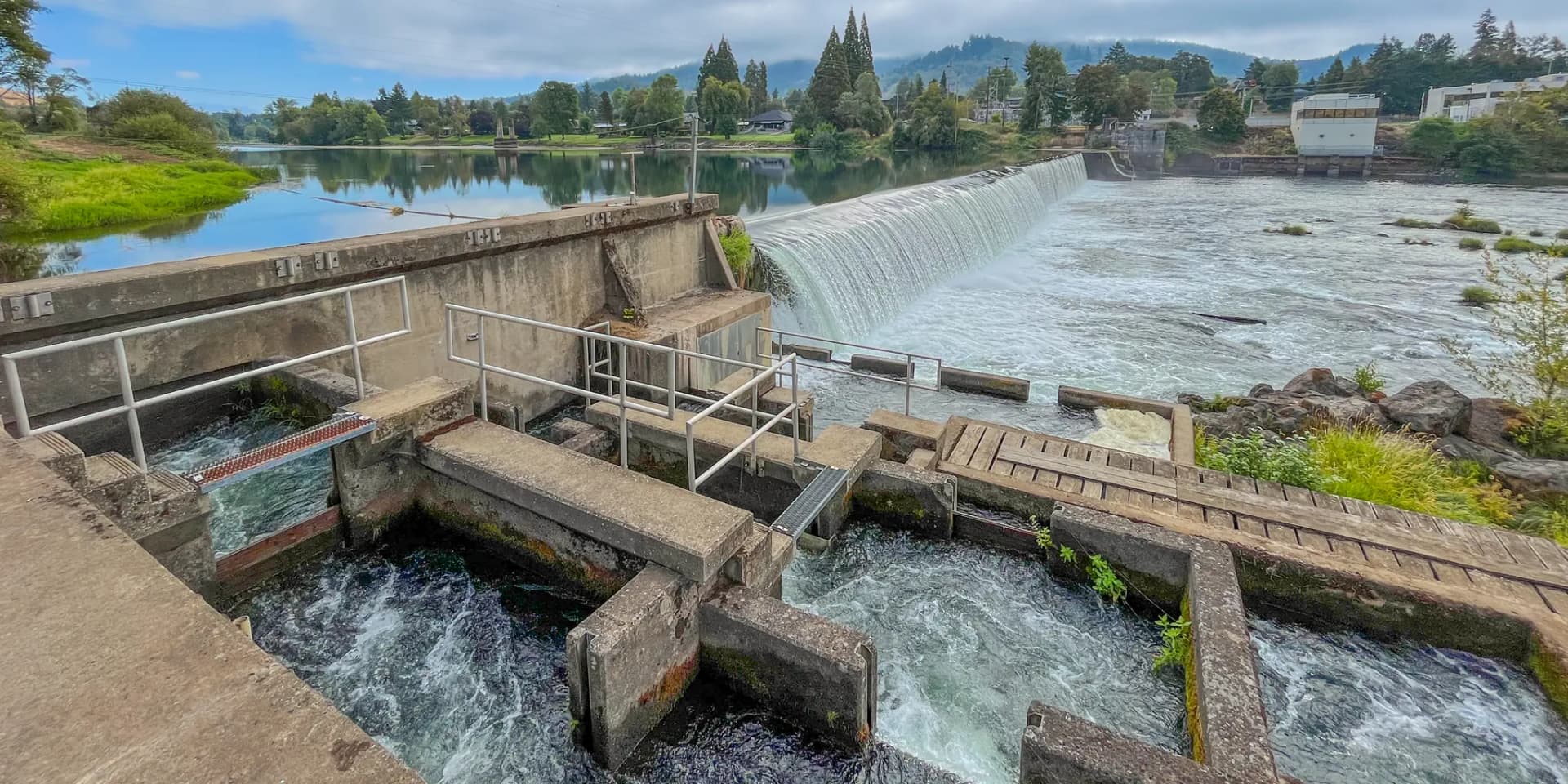
Winchester Dam, North Umpqua River, Oregon
Explore the Curriculum
Jump into any section — no order required.
👋
Welcome
Meet Sam the Fish Scientist and learn about your mission
🔄
Salmon Life Cycle
Life cycle from egg to spawning adult
🐟
Meet the Species
Identify Chinook, Coho, and Steelhead by sight
🏞️
Habitat & the Umpqua
Where salmon live and why rivers matter
🔢
Why Counting Matters
How your counting helps protect salmon
🚀
Ready to Count!
Tips and final prep before your missions
Counting Missions
Watch real underwater video and count fish like a scientist.


NGSS Standards Alignment
This curriculum aligns with Next Generation Science Standards for grades 3-5.
| PE Code | Description | Salmon Topic |
|---|---|---|
| 3-LS1-1 | Develop models to describe that organisms have unique and diverse life cycles. | Anadromous life cycle: egg → alevin → fry → parr → smolt → adult → spawner |
| 3-LS2-1 | Construct an argument that some animals form groups that help members survive. | Salmon populations, monitoring, and why counting matters for survival |
| 3-LS4-3 | Construct an argument with evidence that in a particular habitat some organisms can survive well, some survive less well, and some cannot survive at all. | Species identification — unique adaptations of Chinook, Coho, Steelhead |
| 4-LS1-1 | Construct an argument that plants and animals have internal and external structures that function to support survival, growth, behavior, and reproduction. | Physical features for species ID (gum color, stripes, tail shape, size) |
| 5-LS2-1 | Develop a model to describe the movement of matter among plants, animals, decomposers, and the environment. | Salmon transport ocean nutrients to rivers; nutrient cycling |
| 3-5-ETS1-1 | Define a simple design problem reflecting a need or a want that includes specified criteria for success and constraints on materials, time, or cost. | Fish ladders as engineered solutions; hatchery operations |